
Introduction
In today’s digital world, your online reputation can make or break your business. Before purchasing a product, hiring a service, or contacting a company, most customers search online to learn more about a brand. What they find on search engines, social media platforms, review websites, and online forums significantly influences their decisions.
Online Reputation Management (ORM) is the process of monitoring, improving, and maintaining how your business is perceived online. A positive online reputation helps build trust, attract new customers, and increase sales, while a negative reputation can drive potential customers away.
In this blog, we’ll explore the importance of Online Reputation Management, its benefits, key strategies, and why every business should invest in ORM in 2026.
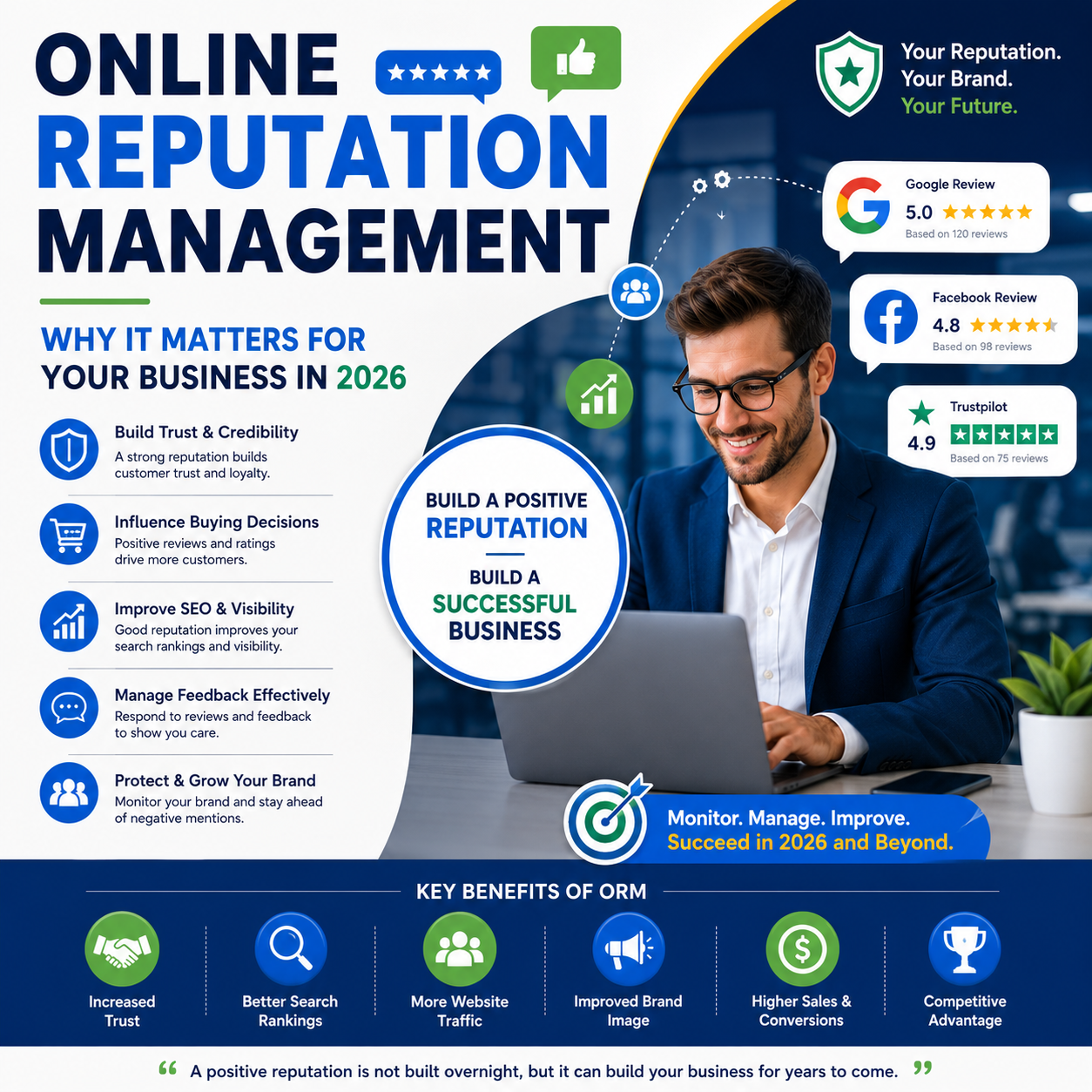
What is Online Reputation Management?
Online Reputation Management (ORM) refers to the practice of controlling and improving how your business appears online. It involves monitoring customer reviews, responding to feedback, managing social media interactions, creating positive content, and addressing negative mentions before they impact your brand image.
ORM combines digital marketing, customer service, public relations, and search engine optimization (SEO) to create a strong and trustworthy online presence.
Why Online Reputation Management is Important
1. Builds Customer Trust
Trust is one of the most important factors influencing customer decisions. Positive reviews, testimonials, and strong online visibility help customers feel confident about choosing your business.
When people see satisfied customers sharing their experiences, they are more likely to trust your products or services.
2. Influences Buying Decisions
Studies show that most consumers read online reviews before making a purchase. A business with positive reviews and ratings often receives more inquiries, leads, and sales than competitors with poor ratings.
Your online reputation directly affects customer purchasing behavior.
3. Improves Brand Image
A strong online reputation enhances your brand’s credibility and professionalism. Businesses that actively engage with customers and address concerns demonstrate transparency and commitment to customer satisfaction.
This creates a positive brand image that attracts loyal customers.
4. Increases Search Engine Visibility
Search engines like Google consider reviews, ratings, and online engagement when ranking businesses. Positive online signals can improve your visibility in search results, helping potential customers find your business more easily.
A strong reputation often leads to higher search rankings and increased website traffic.
5. Protects Against Negative Feedback
No business is perfect. Negative reviews and complaints can happen at any time. Effective ORM helps businesses respond professionally, resolve issues quickly, and minimize damage to their reputation.
Addressing problems promptly can even turn unhappy customers into loyal advocates.
Key Components of Online Reputation Management
Review Management
Customer reviews are one of the most influential aspects of online reputation. Businesses should actively monitor reviews on platforms such as Google, Facebook, and industry-specific review sites.
Responding to both positive and negative reviews shows customers that their feedback matters.
Social Media Monitoring
Social media platforms provide customers with a space to discuss brands publicly. Monitoring social media mentions helps businesses identify customer concerns, answer questions, and engage with their audience.
Regular interaction builds stronger customer relationships and brand loyalty.
Content Creation
Publishing high-quality content helps establish your business as an industry authority. Blog posts, articles, videos, case studies, and social media content can improve your online image and provide valuable information to your audience.
Positive content also helps push negative search results lower in search rankings.
Search Engine Optimization (SEO)
SEO plays a crucial role in Online Reputation Management. Optimized content helps positive information rank higher on search engines, making it easier for customers to find accurate and favorable information about your business.
Effective SEO supports long-term reputation growth.
Brand Monitoring
Businesses should regularly track online mentions, reviews, comments, and discussions related to their brand. Monitoring tools help identify reputation issues early, allowing businesses to respond before problems escalate.
Effective Online Reputation Management Strategies
Encourage Customer Reviews
Satisfied customers are often willing to leave positive reviews if asked. Encourage happy customers to share their experiences on review platforms.
More positive reviews help improve your credibility and online visibility.
Respond to Reviews Professionally
Always respond to customer reviews, whether positive or negative. Thank customers for positive feedback and address concerns raised in negative reviews respectfully and professionally.
Your response reflects your commitment to customer satisfaction.
Create Positive Content
Publish informative blog posts, success stories, customer testimonials, videos, and social media content regularly. Positive content strengthens your brand image and helps improve search engine rankings.
Stay Active on Social Media
Engage with your audience consistently through social media channels. Respond to comments, answer questions, and participate in conversations related to your industry.
Active engagement demonstrates transparency and builds trust.
Address Negative Feedback Quickly
Ignoring negative feedback can worsen reputation issues. Instead, acknowledge concerns, offer solutions, and show genuine interest in resolving problems.
Customers appreciate businesses that take responsibility and prioritize customer satisfaction.
Monitor Your Online Presence
Use reputation monitoring tools to track brand mentions, reviews, and discussions across the internet. Early detection allows you to manage potential issues before they affect your business.
Benefits of Online Reputation Management
Businesses that invest in ORM can experience several advantages, including:
- Increased customer trust and credibility
- Higher search engine rankings
- More website traffic
- Better customer engagement
- Improved brand image
- Increased sales and conversions
- Greater customer loyalty
- Competitive advantage in the marketplace
A positive reputation becomes a valuable business asset that supports long-term growth.
Common ORM Mistakes to Avoid
Many businesses make mistakes that can harm their online reputation. Avoid these common errors:
- Ignoring customer reviews
- Responding emotionally to criticism
- Posting inconsistent content
- Neglecting social media engagement
- Failing to monitor brand mentions
- Deleting negative comments without addressing concerns
A proactive and professional approach is essential for successful reputation management.
The Future of Online Reputation Management
As digital platforms continue to evolve, Online Reputation Management will become even more important. Customers increasingly rely on online information when making decisions, and businesses must maintain a strong online presence to remain competitive.
Artificial intelligence, advanced analytics, and automated monitoring tools are helping businesses manage their reputations more efficiently. However, genuine customer engagement and exceptional service will always remain the foundation of a positive reputation.
Conclusion
Online Reputation Management is no longer optional for modern businesses. It plays a critical role in building trust, attracting customers, improving search engine visibility, and protecting your brand image.
By actively monitoring reviews, engaging on social media, creating valuable content, and addressing customer concerns professionally, businesses can establish a strong and positive online presence.
Investing in Online Reputation Management today can help your business grow faster, build lasting customer relationships, and achieve long-term success in 2026 and beyond.