
What is SEO?
Search Engine Optimization (SEO) is the process of improving a website’s visibility on search engines like Google. When people search for products, services, or information related to your business, SEO helps your website appear higher in search results. The higher your website ranks, the more visitors, leads, and potential customers you can attract.
In today’s digital world, having a website is not enough. Millions of websites compete for attention online, and SEO helps businesses stand out. Whether you own a small local business or a large company, SEO plays a crucial role in building a strong online presence and driving long-term growth.
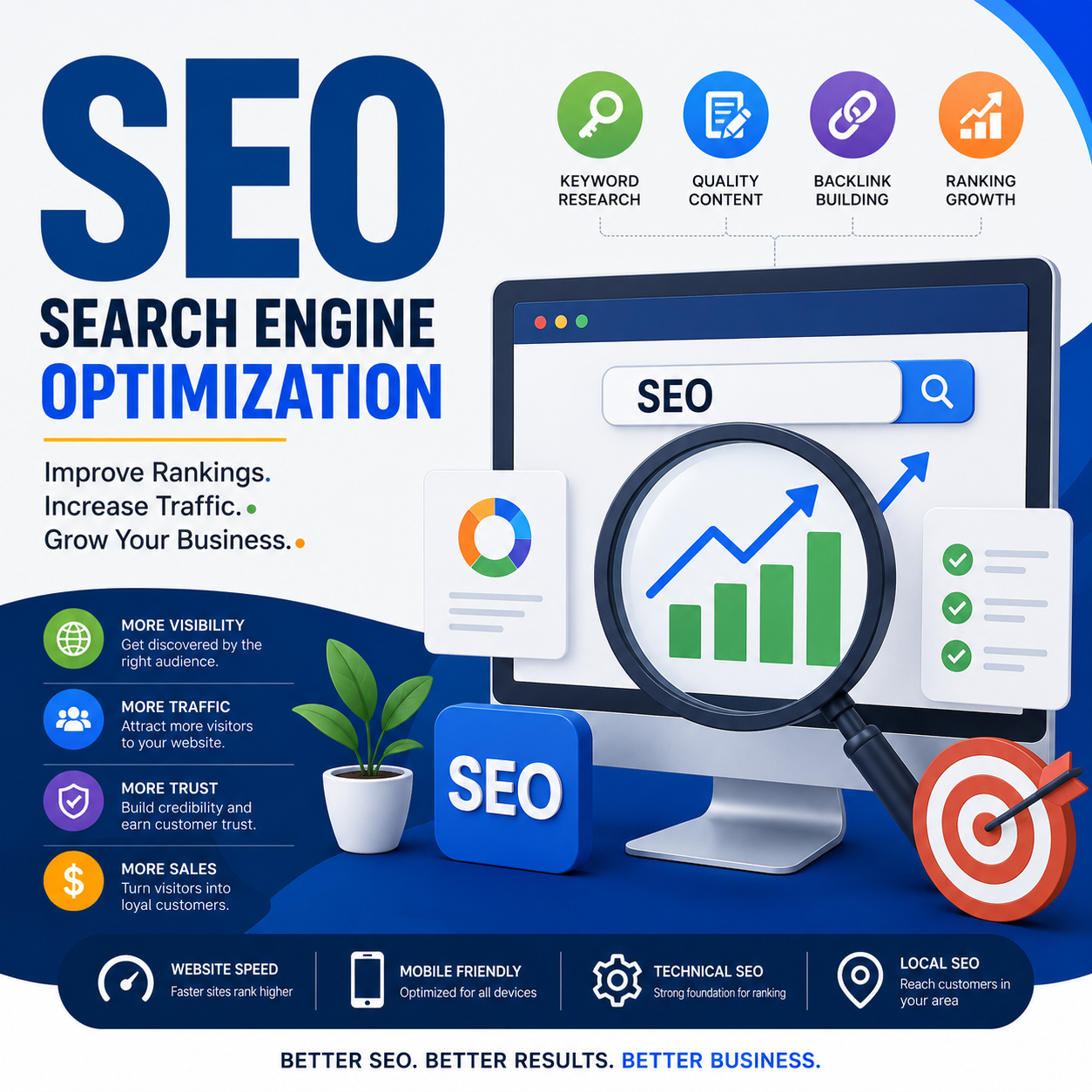
Why SEO is Important
SEO is one of the most effective digital marketing strategies because it targets users who are actively searching for what you offer. Unlike paid advertising, where traffic stops when your budget runs out, SEO continues to generate organic traffic over time.
Some key benefits of SEO include:
- Increased website traffic
- Better brand visibility
- Higher search engine rankings
- Improved user experience
- More qualified leads
- Greater credibility and trust
- Higher conversion rates
- Long-term marketing results
Businesses that invest in SEO often experience sustainable growth because they consistently attract potential customers from search engines.
How Search Engines Work
Search engines like Google use automated programs called crawlers or bots to discover and index web pages. These bots scan websites, analyze content, and store information in a massive database known as an index.
When a user enters a search query, Google evaluates thousands of factors to determine the most relevant results. These factors include:
- Content quality
- Keyword relevance
- Website speed
- Mobile friendliness
- User experience
- Backlink quality
- Page authority
The goal of SEO is to optimize these elements so search engines can better understand and rank your website.
Keyword Research: The Foundation of SEO
Keyword research is the process of identifying the words and phrases people use when searching online. It is one of the most important parts of SEO because it helps businesses understand customer intent.
For example, a digital marketing agency may target keywords such as:
- SEO services
- Digital marketing agency
- Local SEO services
- Website optimization
- Search engine marketing
Choosing the right keywords helps you create content that matches what your audience is looking for. Effective keyword research improves rankings and attracts highly targeted traffic.
On-Page SEO
On-page SEO refers to all the optimization activities performed directly on your website. It helps search engines understand the content and relevance of your pages.
Key elements of on-page SEO include:
1. Title Tags
Title tags are the clickable headlines displayed in search engine results. They should include primary keywords and clearly describe the page content.
2. Meta Descriptions
Meta descriptions provide a brief summary of a page. A compelling meta description can improve click-through rates.
3. Header Tags
Using proper heading structures (H1, H2, H3) improves readability and helps search engines understand content hierarchy.
4. Content Optimization
Content should be informative, engaging, and optimized with relevant keywords without overstuffing.
5. Image Optimization
Optimized images improve page speed and accessibility. Using descriptive file names and alt text helps search engines understand images.
6. Internal Linking
Internal links connect related pages on your website, improving navigation and helping search engines discover content.
Technical SEO
Technical SEO focuses on improving the backend structure of a website to ensure search engines can crawl and index it effectively.
Important technical SEO factors include:
Website Speed
Fast-loading websites provide a better user experience and often rank higher in search results.
Mobile Optimization
With most users browsing on mobile devices, having a responsive website is essential for SEO success.
Secure Website (HTTPS)
Google prioritizes secure websites that use HTTPS encryption.
XML Sitemap
An XML sitemap helps search engines discover and index website pages efficiently.
Fixing Crawl Errors
Regular technical audits help identify and resolve issues that may prevent search engines from accessing your content.
Content Marketing and SEO
Content is often called the backbone of SEO. High-quality content helps attract visitors, answer their questions, and establish authority in your industry.
Popular content formats include:
- Blog posts
- Guides
- Tutorials
- Case studies
- Infographics
- Videos
- FAQs
Creating valuable content around relevant keywords increases your chances of ranking higher in search results. Regularly publishing fresh content also signals to search engines that your website is active and relevant.
Link Building
Link building is the process of acquiring backlinks from other websites. Backlinks act as votes of confidence, indicating that your content is valuable and trustworthy.
High-quality backlinks can significantly improve search rankings. Effective link-building strategies include:
- Guest blogging
- Creating shareable content
- Industry partnerships
- Digital PR
- Business directory listings
However, quality matters more than quantity. A few backlinks from reputable websites are often more valuable than hundreds of low-quality links.
Local SEO
Local SEO helps businesses appear in location-based searches. It is especially important for businesses that serve customers in specific geographic areas.
Examples of local searches include:
- SEO agency near me
- Best digital marketing company
- Website design services in my city
Local SEO strategies include:
- Optimizing Google Business Profile
- Collecting customer reviews
- Creating local content
- Building local citations
- Using location-based keywords
Strong local SEO helps businesses attract nearby customers and increase foot traffic.
Measuring SEO Success
Tracking SEO performance is essential for understanding what works and where improvements are needed.
Key SEO metrics include:
- Organic traffic
- Keyword rankings
- Click-through rate (CTR)
- Bounce rate
- Conversion rate
- Backlink growth
- Page load speed
Regular monitoring helps businesses make data-driven decisions and improve results over time.
Common SEO Mistakes to Avoid
Many websites struggle with SEO because of common mistakes such as:
- Keyword stuffing
- Duplicate content
- Slow website speed
- Poor mobile experience
- Broken links
- Ignoring technical SEO
- Low-quality backlinks
- Inconsistent content publishing
Avoiding these issues can help maintain strong search engine performance and improve user satisfaction.
The Future of SEO
SEO continues to evolve as search engines become more advanced. Artificial intelligence, voice search, user experience, and content quality are becoming increasingly important ranking factors.
Businesses that focus on providing valuable content, excellent user experiences, and technically optimized websites will continue to succeed in search results.
Conclusion
SEO is a powerful digital marketing strategy that helps businesses increase visibility, attract qualified traffic, and generate long-term growth. From keyword research and content creation to technical optimization and link building, every aspect of SEO contributes to better search engine rankings.
Investing in SEO is not just about reaching the top of Google; it is about creating a better experience for users while building trust, authority, and sustainable online success. Businesses that prioritize SEO today position themselves for greater opportunities and stronger growth in the future.