
Introduction
In today’s fast-paced digital world, businesses must adapt to changing consumer behavior to remain competitive. The internet has transformed how people search for products, interact with brands, and make purchasing decisions. Traditional marketing methods such as newspapers, billboards, and television advertisements still have value, but digital marketing has become one of the most effective ways to reach and engage customers.
Digital marketing refers to promoting products or services through online channels such as search engines, social media platforms, websites, email, and online advertising. It enables businesses of all sizes to connect with their target audience, build brand awareness, generate leads, and increase sales. Whether you are a startup, small business, or large corporation, digital marketing offers numerous advantages that can help drive growth and success.
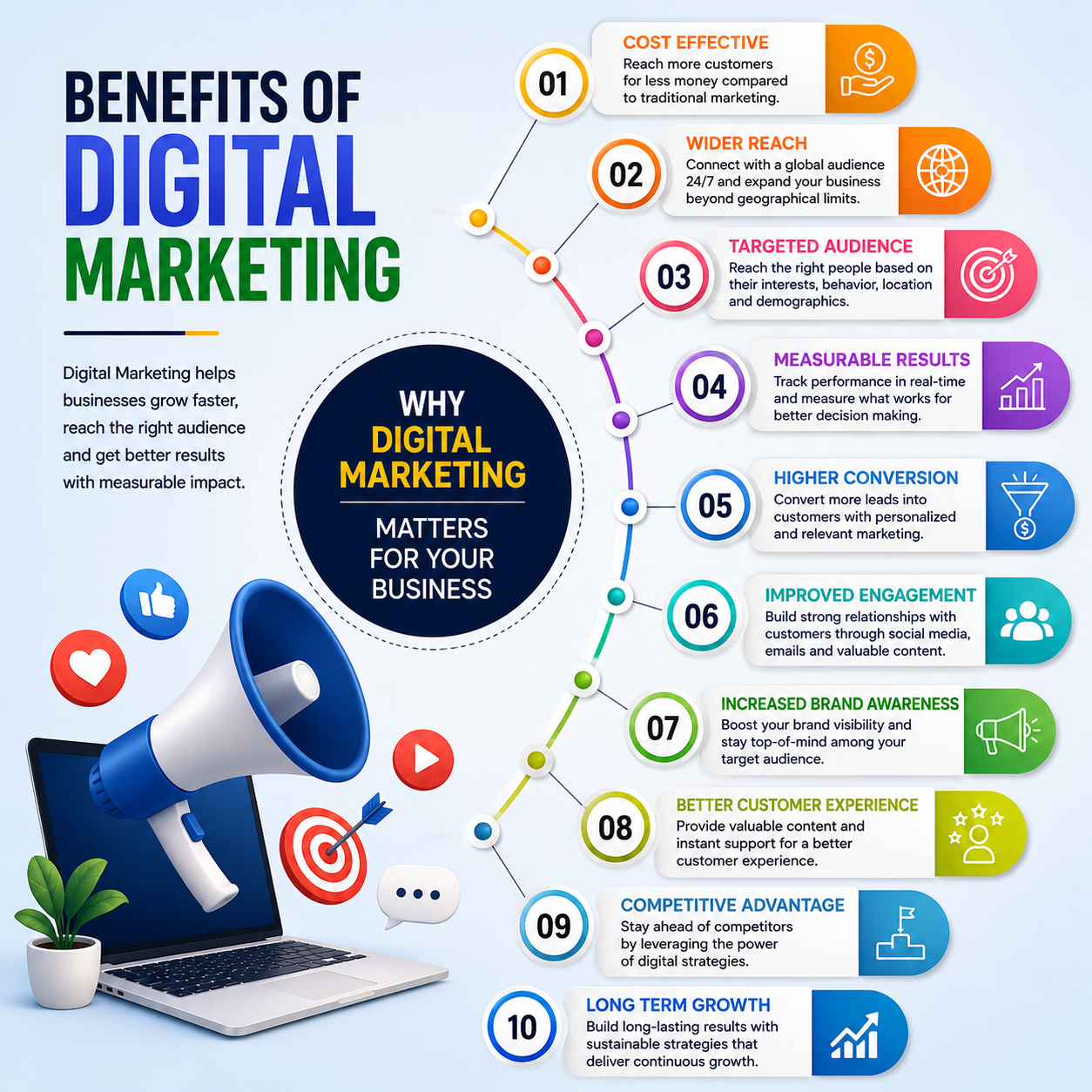
1. Cost-Effective Marketing Solution
One of the biggest benefits of digital marketing is its affordability. Traditional marketing methods often require significant investments, making them difficult for small businesses to afford. Television commercials, newspaper ads, and radio promotions can be expensive and may not always provide measurable results.
Digital marketing allows businesses to promote their products and services at a fraction of the cost. Platforms such as social media, email marketing, and search engine optimization (SEO) provide cost-effective ways to reach a large audience. Even businesses with limited budgets can compete effectively and achieve impressive results.
2. Global Reach
Digital marketing removes geographical barriers and allows businesses to reach customers worldwide. A website can be accessed from any location, enabling companies to expand beyond local markets and connect with international audiences.
This global reach creates new growth opportunities and allows businesses to attract customers they may never have reached through traditional marketing methods. With the right digital marketing strategy, even a small business can build a global presence.
3. Targeted Audience Reach
Unlike traditional advertising, digital marketing allows businesses to target specific audiences based on demographics, interests, behavior, location, and online activities.
For example, a company selling fitness products can target people interested in health and wellness. A local restaurant can advertise only to users within a specific city. This precise targeting ensures marketing budgets are spent efficiently and helps businesses reach people who are most likely to become customers.
4. Improved Brand Awareness
Building brand awareness is essential for long-term business success. Digital marketing helps businesses establish a strong online presence and increase visibility across various platforms.
Through social media marketing, SEO, content creation, and online advertising, businesses can consistently expose their brand to potential customers. The more often people see a brand online, the more familiar and trustworthy it becomes.
A strong digital presence helps businesses stay top-of-mind when customers are ready to make purchasing decisions.
5. Better Customer Engagement
Digital marketing enables businesses to communicate directly with their audience. Social media platforms, emails, live chats, and online communities provide opportunities for meaningful interactions.
Businesses can:
- Respond to customer questions
- Address concerns quickly
- Collect feedback
- Build relationships
- Create customer loyalty
Engaged customers are more likely to trust a brand, recommend it to others, and become repeat buyers.
6. Measurable Results and Analytics
One of the greatest advantages of digital marketing is the ability to measure performance accurately.
Businesses can track:
- Website traffic
- Click-through rates
- Conversion rates
- Customer behavior
- Advertising performance
- Social media engagement
Tools such as Google Analytics and marketing dashboards provide valuable insights into campaign effectiveness. These insights help businesses make informed decisions and continuously improve their marketing strategies.
Unlike traditional marketing, where results can be difficult to measure, digital marketing provides real-time data and clear performance metrics.
7. Higher Conversion Rates
Digital marketing strategies are designed to guide potential customers through the buying journey.
Techniques such as:
- Search Engine Optimization (SEO)
- Pay-Per-Click Advertising (PPC)
- Email Marketing
- Landing Pages
- Remarketing Campaigns
help convert visitors into customers.
Because digital marketing targets interested audiences and delivers personalized messages, conversion rates are often higher compared to traditional marketing methods.
8. Increased Website Traffic
A well-executed digital marketing strategy drives more visitors to a business website.
SEO helps websites rank higher on search engines, while social media marketing, content marketing, and paid advertisements attract additional traffic. Increased website traffic creates more opportunities for lead generation, sales, and business growth.
The more qualified visitors a website receives, the greater the potential for generating revenue.
9. Enhanced Customer Experience
Modern customers expect convenience, speed, and personalized experiences. Digital marketing helps businesses meet these expectations.
Companies can provide:
- Personalized product recommendations
- Relevant content
- Quick customer support
- User-friendly websites
- Mobile-friendly experiences
A positive customer experience increases satisfaction, encourages repeat purchases, and strengthens brand loyalty.
10. Competitive Advantage
Digital marketing allows businesses to compete with larger organizations. Small businesses can use SEO, content marketing, and social media to gain visibility and attract customers without needing enormous advertising budgets.
Companies that embrace digital marketing can stay ahead of competitors by adapting to market trends, engaging customers effectively, and continuously optimizing their strategies.
Businesses that ignore digital marketing risk losing potential customers to competitors who have a stronger online presence.
11. Supports Mobile Users
The majority of internet users now access content through smartphones and tablets. Digital marketing strategies are designed to reach mobile users effectively.
Mobile-friendly websites, responsive designs, mobile advertising, and social media campaigns ensure businesses can connect with customers wherever they are.
As mobile usage continues to grow, businesses that optimize for mobile audiences gain a significant advantage.
12. Builds Trust and Credibility
Consumers often research businesses online before making purchases. A professional website, positive reviews, informative content, and active social media profiles help establish credibility.
Digital marketing allows businesses to demonstrate expertise, showcase customer testimonials, and provide valuable information that builds trust.
When customers trust a brand, they are more likely to choose its products or services over competitors.
13. Supports Business Growth
Digital marketing plays a critical role in business expansion. By generating leads, increasing brand visibility, and improving customer engagement, businesses can achieve sustainable growth.
Whether the goal is to increase sales, launch new products, enter new markets, or strengthen customer relationships, digital marketing provides the tools needed to achieve success.
Its scalability allows businesses to adjust campaigns based on performance and business objectives.
14. Long-Term Benefits
Many digital marketing strategies continue delivering value long after the initial investment.
For example:
- SEO can generate organic traffic for years.
- Evergreen content continues attracting visitors.
- Email subscriber lists remain valuable marketing assets.
- Social media communities foster ongoing engagement.
These long-term benefits make digital marketing one of the most sustainable marketing investments available.
Conclusion
Digital marketing has revolutionized the way businesses connect with customers and promote their products and services. From increasing brand awareness and driving website traffic to generating leads and improving customer engagement, the benefits of digital marketing are undeniable.
Its affordability, measurable results, global reach, and ability to target specific audiences make it an essential component of modern business success. Companies that invest in digital marketing are better positioned to adapt to changing consumer behavior, compete effectively, and achieve long-term growth.
As technology continues to evolve, digital marketing will remain one of the most powerful tools for businesses seeking to build strong customer relationships, increase revenue, and thrive in an increasingly digital world.