
Introduction
The way businesses connect with customers has changed dramatically over the last decade. Today, people use the internet to search for products, compare prices, read reviews, and make purchasing decisions. Whether someone is looking for a local restaurant, a clothing brand, or professional services, their journey often begins online. This shift in consumer behavior has made digital marketing one of the most important tools for businesses of all sizes.
Digital marketing helps companies reach potential customers through online platforms such as search engines, social media, websites, email, and digital advertisements. It allows businesses to communicate directly with their audience, build brand awareness, and drive measurable results. In an increasingly digital world, businesses that embrace digital marketing are better positioned to grow, compete, and succeed.
What Is Digital Marketing?
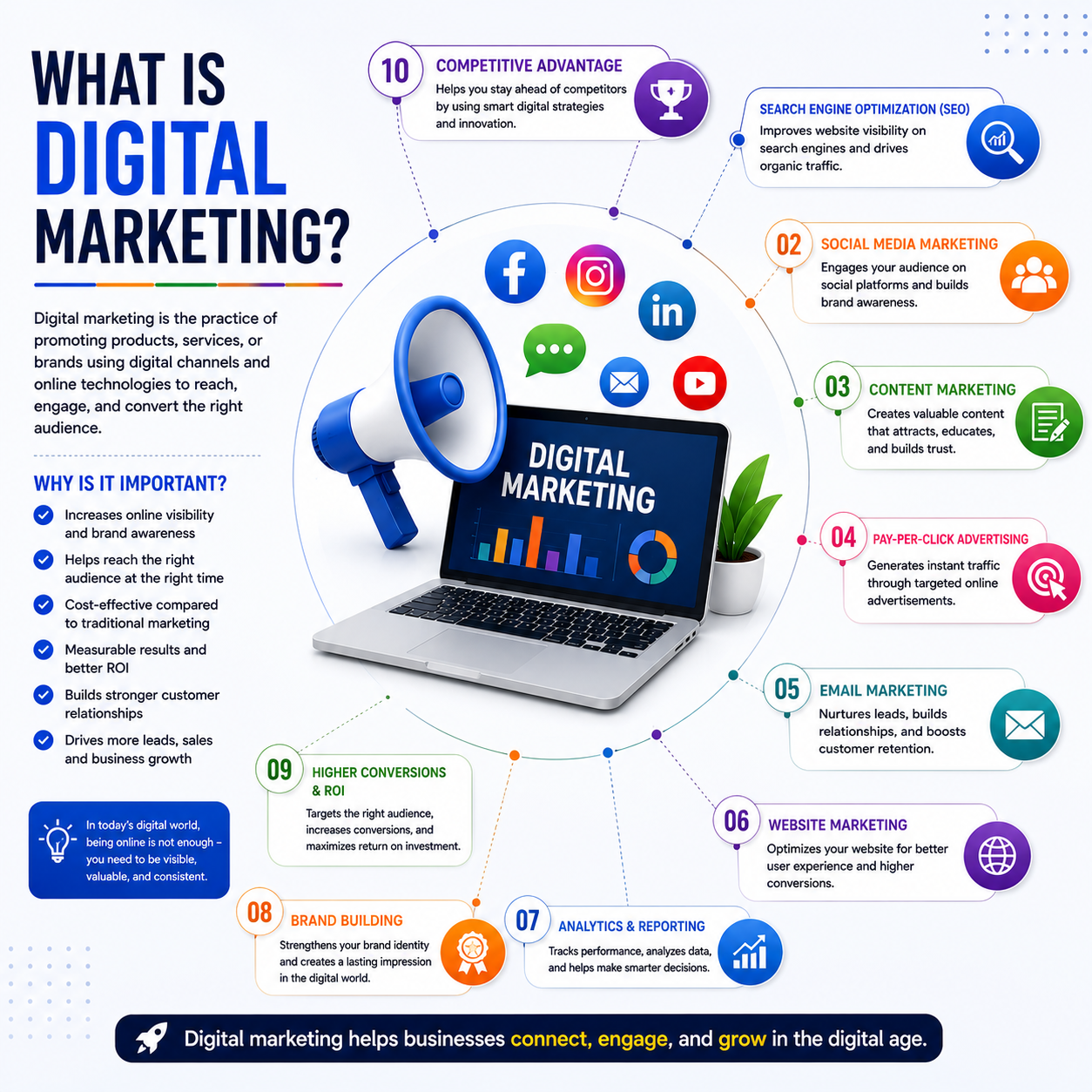
Digital marketing is the practice of promoting products, services, or brands using internet-based channels and digital technologies. Unlike traditional marketing methods such as newspapers, television, and billboards, digital marketing focuses on reaching customers through online platforms where they spend a significant portion of their time.
The goal of digital marketing is simple: connect with the right audience at the right time using the right message. Through various online strategies, businesses can attract visitors, generate leads, increase sales, and build long-term customer relationships.
Digital marketing includes a wide range of activities, from optimizing a website for search engines to running social media campaigns and sending personalized email newsletters. Each strategy works together to create a strong online presence and support business growth.
The Main Components of Digital Marketing
Search Engine Optimization (SEO)
SEO is the process of improving a website so it appears higher in search engine results. When users search for information, products, or services, websites that rank near the top are more likely to receive clicks and traffic.
SEO involves optimizing website content, improving page speed, researching keywords, and building authority through quality backlinks. A strong SEO strategy helps businesses attract organic traffic without paying for every visitor.
Social Media Marketing
Social media marketing uses platforms such as Facebook, Instagram, LinkedIn, YouTube, and X to promote a brand and engage with customers. These platforms allow businesses to share content, interact with audiences, and build meaningful relationships.
Social media is not just about posting updates. It is a powerful tool for storytelling, customer service, community building, and brand promotion.
Content Marketing
Content marketing focuses on creating valuable and relevant content that attracts and educates a target audience. This content can take many forms, including blog articles, videos, infographics, guides, podcasts, and case studies.
Instead of directly selling products, content marketing helps businesses earn trust by providing useful information. Over time, this trust can lead to increased brand loyalty and customer conversions.
Pay-Per-Click Advertising (PPC)
PPC advertising allows businesses to display paid advertisements on search engines and social media platforms. Advertisers pay only when someone clicks on their ad.
This method is effective for generating immediate traffic and reaching specific audiences. Businesses can target users based on demographics, interests, locations, and search behavior.
Email Marketing
Email marketing remains one of the most reliable digital marketing strategies. It allows businesses to communicate directly with customers through personalized messages.
Companies use email marketing to share updates, promotions, educational content, and product announcements. Well-designed email campaigns can strengthen customer relationships and encourage repeat purchases.
Website Marketing
A website serves as the digital home of a business. It is often the first impression potential customers have of a brand.
An effective website should be visually appealing, mobile-friendly, easy to navigate, and optimized for conversions. A strong website supports all other digital marketing efforts and helps turn visitors into customers.
Why Is Digital Marketing Important?
Digital marketing has become essential because consumer behavior continues to evolve. More people are spending time online than ever before, making digital platforms the most effective place for businesses to connect with their audience.
Increased Visibility
One of the biggest advantages of digital marketing is increased visibility. Businesses can reach potential customers through search engines, social media platforms, and online advertisements.
A strong online presence helps a company become more recognizable and accessible. When customers repeatedly encounter a brand online, they are more likely to remember and trust it.
Cost-Effective Promotion
Traditional advertising can be expensive and difficult to measure. Digital marketing offers affordable alternatives that allow businesses to maximize their marketing budgets.
Small businesses can use strategies such as SEO, content marketing, and social media marketing to compete with larger competitors without spending large amounts of money. This creates a level playing field where quality and strategy often matter more than budget size.
Precise Audience Targeting
Digital marketing provides advanced targeting capabilities that traditional marketing cannot match.
Businesses can target audiences based on factors such as:
- Age
- Gender
- Location
- Interests
- Online behavior
- Purchasing habits
This precision helps ensure that marketing messages reach the people most likely to be interested in a product or service, increasing the effectiveness of campaigns.
Better Customer Engagement
Modern consumers expect businesses to be accessible and responsive. Digital marketing creates opportunities for two-way communication between brands and customers.
Through social media, email, live chat, and online communities, businesses can answer questions, gather feedback, and provide support. This interaction helps strengthen customer relationships and improve satisfaction.
Measurable Results
One of the most valuable aspects of digital marketing is the ability to track and measure performance.
Businesses can monitor:
- Website visitors
- Ad clicks
- Conversion rates
- Customer engagement
- Sales performance
These insights help marketers understand which strategies are working and where improvements are needed. Data-driven decisions often lead to better results and higher returns on investment.
Increased Sales Opportunities
Digital marketing helps businesses attract potential customers at different stages of the buying process.
Someone searching for information online may discover a blog article. Later, they may follow the company on social media, subscribe to an email list, and eventually make a purchase. Digital marketing creates multiple touchpoints that guide customers toward conversion.
Building Trust and Credibility
Consumers are more likely to buy from brands they trust. Digital marketing helps businesses establish credibility by sharing valuable content, showcasing customer reviews, and maintaining a professional online presence.
Consistently providing useful information demonstrates expertise and positions a business as a reliable source within its industry.
Global Reach
Unlike traditional marketing, digital marketing allows businesses to reach audiences across the world.
A local company can attract international customers through a website, social media presence, and online advertising. This expanded reach creates opportunities for growth that were once available only to large corporations.
The Future of Digital Marketing
Digital marketing continues to evolve as technology advances. Artificial intelligence, automation, voice search, personalized experiences, and video content are shaping the future of the industry.
Consumers increasingly expect personalized and relevant experiences. Businesses that embrace innovation and adapt to changing trends will be better equipped to meet customer expectations and remain competitive.
The future of marketing will continue to be driven by data, technology, and customer-focused strategies.
Conclusion
Digital marketing is more than just an advertising method—it is a powerful business growth strategy. It enables businesses to connect with their audience, build brand awareness, generate leads, and increase sales through online channels.
Its ability to provide measurable results, target specific audiences, and create meaningful customer relationships makes it an essential part of modern business success. Whether a company is a startup or an established brand, digital marketing offers opportunities to grow, compete, and thrive in an increasingly digital marketplace.
As technology continues to transform the way people interact with businesses, digital marketing will remain one of the most important investments any organization can make for long-term success.